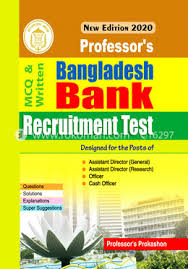
Getting ready for a bank job exam in Bangladesh can feel a bit overwhelming, especially for newcomers. You might wonder about the types of questions asked and how to find reliable answers. Don’t worry, many people find the bank job exam question solution Bangladesh a bit tricky at first.
This guide will break it down simply. We’ll walk through everything step-by-step to make it easy to follow.
Key Takeaways
- Learn common question patterns for bank jobs in Bangladesh.
- Discover effective strategies for finding accurate solutions.
- Understand the key subjects tested in bank recruitment exams.
- Gain confidence in tackling your upcoming bank job exam.
- Identify helpful resources for practice and preparation.
Understanding Bank Job Exam Question Patterns
Bank job exams in Bangladesh cover a range of topics designed to test a candidate’s knowledge and skills. These exams are competitive, and understanding the usual question patterns is your first step to success. You’ll often see sections on Bengali language, English language, general knowledge, analytical ability, and mathematical aptitude.
Each of these areas has specific types of questions you should be prepared for. For instance, in the Bengali section, you might encounter grammar, literature, and translation. The English section typically includes vocabulary, grammar, sentence correction, and comprehension.
General knowledge often focuses on current affairs, Bangladesh’s history and culture, and basic economics. Analytical ability might involve reasoning puzzles and problem-solving, while mathematical aptitude tests your arithmetic and algebra skills.
Bengali Language Section Details
The Bengali language section is fundamental for any job exam in Bangladesh. It checks your command over your native language. You will likely face questions on grammar, spelling, synonyms, antonyms, and sentence structure.
Understanding literary terms and basic Bengali literature can also be helpful. Many candidates find it useful to practice translation between Bengali and English, as this often appears. Reading Bengali newspapers and literary works regularly can significantly improve your score in this section.
Paying attention to common grammatical errors and their corrections is also a smart strategy. This part of the exam tests not just your knowledge but also your ability to communicate clearly in Bengali.
- Grammar and Sentence Structure: Focus on identifying correct sentence formation and common errors.
- Vocabulary Building: Learn synonyms, antonyms, and idiomatic expressions to expand your word bank.
- Literature and Translation: Familiarize yourself with key literary figures and practice translating sentences.
For example, a question might ask you to choose the correct spelling of a word or find the synonym for a given word. Practicing these types of questions from previous exam papers is highly recommended. A strong foundation in Bengali will boost your overall exam performance.
English Language Section Details
The English section of bank job exams aims to evaluate your proficiency in English. This includes your understanding of grammar, vocabulary, and your ability to comprehend and use the language effectively. Common topics include error spotting, fill in the blanks, sentence improvement, synonyms, antonyms, and reading comprehension.
Idioms and phrases are also frequently tested. To excel here, consistent practice with English grammar rules and a wide vocabulary are essential. Reading English newspapers, magazines, and books will broaden your exposure to different language structures and words.
Many candidates also find it beneficial to use English learning apps or websites for daily practice. Building confidence in your English skills is key to performing well in this section.
- Grammar and Error Correction: Master tenses, prepositions, articles, and subject-verb agreement.
- Vocabulary Enhancement: Study common English words, their meanings, and usage in sentences.
- Comprehension Skills: Practice reading passages and answering questions based on them.
For instance, you might be asked to identify the grammatical error in a sentence or select the most appropriate word to complete it. A practical approach involves working through sample questions that mirror the exam format. This proactive preparation ensures you are well-equipped for the challenges.
General Knowledge and Current Affairs
This segment tests your awareness of the world around you, with a strong emphasis on Bangladesh. You will likely encounter questions related to Bangladesh’s history, geography, economy, government, and significant events. Current affairs are crucial, so staying updated on national and international news from the past six months to a year is vital.
Topics can range from recent political developments and economic policies to important social issues and international relations. Understanding the functioning of banks and financial institutions in Bangladesh is also a common theme. A good strategy is to read reputable newspapers, watch news channels, and follow reliable online news sources regularly.
Keeping a notebook to jot down important facts can be very helpful for revision.
- National Awareness: Study Bangladesh’s history, constitution, major rivers, and key national figures.
- Economic and Financial Literacy: Learn about Bangladesh Bank, GDP, inflation, and banking sectors.
- Global Events: Be aware of major international news, organizations, and ongoing global issues.
For example, a question might ask about the current governor of Bangladesh Bank or a recent significant event in the country. Keeping a factual record helps in recalling these details accurately during the exam. Regular updates are the best defense.
Finding Bank Job Exam Question Solutions Bangladesh
Locating accurate bank job exam question solutions in Bangladesh requires a strategic approach. Many candidates search online for past papers and their answers. However, not all sources are reliable.
It’s important to use reputable websites, coaching centers, and educational platforms that are known for providing authentic materials. Many educational institutions in Bangladesh specialize in bank job preparation and offer comprehensive study guides and solved question papers. You can also find solutions in books published by well-known academic publishers.
Joining online forums or study groups where other aspirants share resources and discuss problems can be very beneficial. Remember, the goal is not just to find answers but to understand the reasoning behind them.
Reliable Online Resources
The internet offers a wealth of resources for finding bank job exam question solutions. Many educational websites and blogs dedicated to job preparation in Bangladesh provide free access to past exam papers with detailed solutions. Look for sites that regularly update their content and have a good reputation among job seekers.
Some popular platforms offer mock tests and quizzes based on previous exam patterns, which often come with explanations. YouTube channels by educators also frequently post video explanations for challenging questions. When using online resources, always cross-check information from multiple sources if possible.
This ensures accuracy and helps you learn different methods of solving problems. Staying informed about the latest available resources is key to effective preparation.
- Dedicated Job Portals: Websites focusing on Bangladeshi job market news and exam preparation.
- Educational Blogs and Forums: Platforms where educators and students share notes and solutions.
- YouTube Channels: Educators often explain complex problems step-by-step.
For instance, searching “Bangladesh Bank previous questions and answers” on a search engine will yield many results. Evaluating the credibility of these sources is your next step. Look for clear explanations and logical reasoning in the provided solutions.
Offline Study Materials and Coaching Centers
While online resources are plentiful, traditional offline materials and coaching centers remain highly valuable. Many reputable coaching centers in Bangladesh offer specialized courses for bank job exams. These centers typically provide printed study materials, practice books, and even conduct mock exams that simulate the actual test environment.
The solutions provided in these materials are often curated by experienced teachers and are generally accurate. Purchasing books from well-known publishers that focus on bank exam preparation can also be a great investment. These books often contain categorized questions from previous years along with detailed answers and explanations.
Visiting the library of a coaching center or a local bookstore can help you find these valuable resources. The structured approach of these materials can be very reassuring.
- Published Books: Look for books by authors recognized for bank exam preparation guides.
- Coaching Center Notes: Materials provided by established coaching institutes are often very thorough.
- Past Exam Papers: Compilations of solved papers are invaluable for practice.
For example, a book titled “Bank Job Preparation Guide” might contain solved papers from various banking recruitment exams. These materials offer a tangible way to study and practice. The structured format aids systematic learning.
Key Subjects Tested in Bank Recruitment Exams
Bank recruitment exams in Bangladesh are designed to assess a broad spectrum of skills and knowledge. The core subjects are usually consistent across different banks, though the emphasis might vary slightly. Understanding these subjects deeply will help you focus your preparation effectively.
The main areas include quantitative aptitude, logical reasoning, English proficiency, and general knowledge, often with a specific focus on banking and economics. Each subject tests different cognitive abilities, from numerical problem-solving to linguistic clarity and general awareness. Mastering these subjects requires dedicated study and consistent practice.
It’s about building a strong foundation in each area and then refining your skills through mock tests and past paper analysis.
Quantitative Aptitude
Quantitative aptitude tests your ability to solve mathematical problems accurately and efficiently. This section typically includes topics like arithmetic, algebra, geometry, and data interpretation. Questions often involve calculations related to percentages, ratios, profit and loss, time and work, speed and distance, and simple and compound interest.
Data interpretation questions may require you to analyze charts, graphs, and tables to extract information and draw conclusions. Developing speed and accuracy is crucial for this section. Practicing a variety of problems and understanding the underlying mathematical concepts is essential.
Regular revision of basic mathematical formulas and techniques can significantly improve your performance. Aim to solve problems within a time limit to build exam stamina.
- Arithmetic Operations: Master calculations involving fractions, decimals, percentages, and ratios.
- Algebra and Geometry: Understand basic equations, inequalities, and geometric principles.
- Data Interpretation: Practice analyzing graphs, charts, and tables to extract information.
For instance, a question might ask you to calculate the total profit of a company over several years based on a given bar chart. Understanding how to read and interpret visual data quickly is a key skill. Consistent practice builds this ability.
Logical Reasoning
Logical reasoning evaluates your ability to think critically and solve problems using logic. This section often includes puzzles, series completion, coding-decoding, blood relations, directions, and syllogisms. The questions are designed to test your analytical skills and your capacity to identify patterns and draw conclusions.
You need to approach these problems systematically. Break down complex puzzles into smaller parts. Identify the relationships between different elements.
Practice is key to developing speed and accuracy in this area. Familiarizing yourself with different types of logical reasoning questions will help you recognize patterns and apply appropriate strategies. Focus on understanding the logic behind each question type.
- Verbal Reasoning: Analyze statements, draw inferences, and identify assumptions.
- Analytical Reasoning: Solve puzzles, seating arrangements, and sequence-based problems.
- Non-Verbal Reasoning: Interpret patterns in shapes, figures, and series.
For example, a question might present a sequence of letters or numbers and ask you to identify the next element based on a logical pattern. Recognizing these patterns is the core skill tested. Practice helps you spot them faster.
Banking and Economics Awareness
This specialized area focuses on your knowledge of the banking sector and fundamental economic principles, particularly relevant to Bangladesh. Questions may cover the history of banking in Bangladesh, the role and functions of Bangladesh Bank, different types of bank accounts, loans, and credit. You might also be asked about economic terms, national and international financial institutions, and current economic policies.
Understanding basic economic concepts like inflation, GDP, monetary policy, and fiscal policy is important. Staying updated with news related to the financial sector and economic developments in Bangladesh will be highly beneficial. This section tests your readiness for a career in the banking industry.
- Bangladesh Bank Functions: Understand its role in monetary policy and banking regulation.
- Types of Loans and Advances: Know the differences and purposes of various credit facilities.
- Economic Indicators: Familiarize yourself with terms like inflation, GDP, and interest rates.
A question could ask about the primary tool used by Bangladesh Bank to control inflation. Knowing about tools like repo rates and reverse repo rates is essential. This highlights the practical application of economic knowledge.
Strategies for Effective Preparation
Effective preparation for bank job exams involves a structured approach and consistent effort. It’s not just about studying; it’s about studying smartly. Start by understanding the syllabus and exam pattern thoroughly.
Create a realistic study schedule that allocates sufficient time to each subject. Prioritize subjects where you are weaker and ensure you dedicate extra time to them. Regularly practicing with previous years’ question papers is crucial.
This helps you understand the difficulty level, question types, and time management. Mock tests are also invaluable for simulating exam conditions and identifying areas for improvement. Seeking feedback and discussing challenging topics with peers or mentors can further enhance your learning process.
Staying positive and motivated throughout your preparation journey is equally important.
Creating a Study Plan
A well-structured study plan is your roadmap to success. Begin by gathering all the necessary information about the exam syllabus and pattern. Break down the syllabus into smaller, manageable topics.
Estimate the time required for each topic based on its difficulty and your current understanding. Allocate specific study hours for each subject daily or weekly. Be realistic with your time commitments.
Include regular revision slots to reinforce what you’ve learned. Also, schedule time for practice tests and analyzing your performance. Flexibility is key; be prepared to adjust your plan if needed based on your progress.
A consistent study routine helps build momentum and reduces last-minute stress.
- Syllabus Breakdown: Divide the entire syllabus into smaller, topic-wise sections.
- Time Allocation: Assign specific time slots for each subject and topic based on priority.
- Revision Schedule: Plan regular intervals for revisiting previously studied topics.
For example, you might decide to study quantitative aptitude for two hours every morning and English for one hour every evening. This structured approach ensures all areas are covered systematically. Consistency is more important than intensity.
Utilizing Past Papers and Mock Tests
Previous years’ question papers and mock tests are invaluable tools for exam preparation. They offer a realistic simulation of the actual exam environment and help you gauge your preparedness. Solving past papers allows you to familiarize yourself with the types of questions asked, the difficulty level, and the marking scheme.
It also helps in identifying your strong and weak areas. Mock tests, conducted under timed conditions, are excellent for improving your time management skills and building stamina. After each mock test, carefully analyze your performance.
Identify mistakes, understand the correct solutions, and work on improving those specific areas. This feedback loop is crucial for targeted preparation and significant improvement.
- Pattern Familiarity: Understand the distribution of questions across sections and topics.
- Time Management Practice: Improve your ability to answer questions within the allotted time.
- Performance Analysis: Identify strengths and weaknesses for focused improvement.
Consider setting a timer when you solve past papers, just like in the real exam. This practice makes you comfortable with the pressure of time. Analyzing your mistakes is just as important as taking the test itself.
Common Myths Debunked
Myth 1: Bank job exams are only for math geniuses.
Reality: While quantitative aptitude is a significant part of bank exams, it’s not exclusive to math geniuses. The questions test logical application of arithmetic and basic algebra, not advanced calculus or complex theorems. Many successful candidates have moderate math skills but prepared diligently by practicing various question types and understanding the logic.
Focus on understanding concepts and practicing regularly.
Myth 2: Only coaching centers can provide effective preparation.
Reality: While coaching centers offer structured guidance and resources, they are not the only path to success. Many individuals prepare effectively using self-study methods, leveraging online resources, books, and past papers. The key is discipline, a well-planned study schedule, and consistent practice, regardless of the preparation method.
Myth 3: Memorizing answers is enough for the bank job exam.
Reality: Simply memorizing answers from solved papers is not effective. The exam questions are designed to test your understanding and analytical skills. While familiarity with question types is good, you must understand the underlying logic and methods to solve different problems, including those you haven’t seen before.
True learning involves comprehension, not just rote memorization.
Myth 4: English is too difficult to master for the exam.
Reality: English proficiency can be improved with consistent effort. By focusing on grammar rules, expanding vocabulary, and practicing comprehension, anyone can enhance their English skills. Regular reading of English newspapers and books, along with dedicated practice of exam-specific question types, can significantly boost your confidence and performance in this section.
Frequently Asked Questions
Question: Where can I find the most reliable bank job exam question solution Bangladesh?
Answer: Reliable solutions can be found on reputable educational websites, through established coaching centers, in well-known publishers’ books, and sometimes on dedicated government job preparation forums. Always cross-check information.
Question: What is the average difficulty level of bank job exams in Bangladesh?
Answer: Bank job exams are generally considered moderately difficult and highly competitive, requiring a good balance of speed, accuracy, and broad knowledge across various subjects.
Question: How important is general knowledge for bank job exams?
Answer: General knowledge, especially current affairs and basic banking knowledge, is very important. It often forms a significant portion of the exam and tests your awareness of national and international events and the financial sector.
Question: Can I prepare for bank job exams without attending a coaching center?
Answer: Yes, you can prepare effectively without a coaching center by using self-study materials, past papers, online resources, and maintaining a disciplined study routine.
Question: How many hours a day should I study for bank job exams?
Answer: The ideal study time varies, but aiming for 4-6 hours of focused study daily, with regular breaks and revisions, is generally recommended for comprehensive preparation.
Summary
You’ve learned about the structure and key subjects of bank job exams in Bangladesh. We covered how to find reliable question solutions and explored effective preparation strategies. This guide empowers you to approach your exam with confidence.
Focus on consistent practice and understanding concepts. You can achieve your goal of securing a bank job.