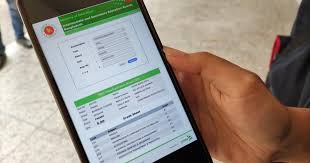
Many people find it tricky to check their job exam results online in Bangladesh. It can feel confusing if you’re new to it. You might worry about missing important information or not knowing where to look.
But don’t worry! We’re here to make it super simple for you. We’ll guide you step-by-step.
Get ready to learn exactly how to check job exam result Bangladesh online with ease. This guide will show you everything you need to know to find your results quickly and without stress.
Key Takeaways
- You will learn the official websites to check your results.
- You will discover the necessary information needed to access your score.
- You will understand common issues and how to troubleshoot them.
- You will know how to interpret the results once you find them.
- You will get tips on what to do after checking your result.
Finding Your Job Exam Results Online Bangladesh
Checking job exam results online in Bangladesh has become the standard way for many government and private organizations. This method is faster and more efficient than waiting for postal mail or official announcements in newspapers. However, for first-time applicants or those less familiar with online processes, it can seem a bit overwhelming.
The internet can be vast, and knowing the correct website or portal is key to finding your specific result without getting lost in irrelevant information.
This section will guide you through the initial steps of locating the right place to check your results. We will cover how to identify official sources and what information to have ready before you begin your search. It’s about making the process clear and accessible, even if you’re not a tech expert.
We aim to demystify the online result checking procedure so you can feel confident and prepared.
Official Websites and Portals
The first step to checking your job exam result in Bangladesh online is to identify the official website or portal where the results are published. Government job results are often found on the website of the recruiting authority or a dedicated government job portal. For private sector jobs, results are usually posted on the company’s career page or their main website.
It’s important to distinguish official sites from unofficial ones to avoid misinformation.
Some common official platforms include the Public Service Commission (PSC) website for government jobs, and specific ministry or department websites. For bank jobs, it might be the bank’s own career site or a platform like JobsAps. Always look for a “.gov.bd” domain for government entities or a reputable “.com” or “.org” domain for private companies.
Verify the authenticity by checking for official contact details or recent announcements.
Identifying the Correct Authority
Before you even start looking for websites, you need to know which organization conducted the exam. Was it a specific government ministry, a public service commission, a particular bank, or a private company? Knowing this will significantly narrow down your search.
For example, if you applied for a job advertised by the Bangladesh Bank, you would look for results on the Bangladesh Bank’s official website or their designated recruitment portal.
If the advertisement mentioned a specific recruitment agency or a recruitment portal like bdjobs.com, that’s another place to check. Sometimes, results are released through news agencies or specific government websites like Ministry of Public Administration (MoPA) or Directorate of Primary Education (DPE). Always refer back to your job application confirmation or the original job advertisement for this crucial information.
Gathering Necessary Information
Once you know where to look, the next step is to gather the information you’ll need to access your result. This is like having your key ready to open a door. Without the right information, even the correct website won’t help you.
Organizations require specific details to ensure only the eligible candidates can view their personal results, protecting privacy and security.
The most common pieces of information requested are your applicant ID or roll number, and often your date of birth. Some portals might also ask for your father’s name, mother’s name, or even a security code or captcha. Having these details handy will make the process smooth and quick.
Double-checking these details before entering them is also a smart move to avoid errors.
Applicant ID or Roll Number
Your applicant ID, also known as your roll number or candidate number, is the unique identifier assigned to you when you applied for the job. This number is crucial for the system to pull up your specific exam record. It’s usually found on your admit card, application confirmation slip, or any email you received after applying.
Make sure to copy this number accurately. Even a single digit wrong can prevent you from seeing your result.
For instance, if your admit card shows “Applicant ID: 123456789”, you must enter precisely “123456789”. If it’s a roll number, it might be a different format like “Roll: AB12345”. Always check the format specified on the result portal.
If you’ve lost your admit card or confirmation email, you might need to contact the recruiting authority directly for assistance in retrieving this essential number.
Date of Birth and Other Personal Details
Many result portals use your date of birth as a secondary verification step. This adds an extra layer of security, ensuring that someone else cannot access your result by simply knowing your roll number. It’s a common practice to protect your personal information.
Ensure your date of birth is entered in the exact format requested, whether it’s DD/MM/YYYY, MM/DD/YYYY, or YYYY-MM-DD.
In some cases, you might also need to provide your father’s name or mother’s name, especially if there’s a possibility of duplicate roll numbers or names. This helps the system confirm your identity beyond doubt. Always refer to the format displayed on the website for these details.
For example, if it asks for “Father’s Name,” enter it exactly as it appears on your official documents or admit card.
Step-by-Step Process to Check Results
Now that you have all the necessary information and know where to look, let’s walk through the typical process of checking your job exam result online in Bangladesh. This step-by-step guide is designed to be straightforward, cutting out any confusion. Following these steps will help you locate your result efficiently.
It’s a practical roadmap to a usually anxious wait.
This process can vary slightly depending on the organization, but the core steps remain largely the same. We will cover the most common scenarios. Remember, patience is key, and having everything ready beforehand will make the experience much smoother.
Let’s get started on finding out how well you did.
Accessing the Official Result Portal
The first action is to open your web browser and type the exact web address of the official result portal. This could be the main website of the recruiting body, like the Bangladesh Public Service Commission (BPSC) at www.bpsc.gov.bd, or a specific recruitment page. If you are unsure of the URL, search for the organization’s name followed by “recruitment” or “results” in a search engine.
Always verify the URL to ensure it is indeed the official site.
Look for sections labeled “Results,” “Exam Results,” “Notice Board,” or “Circulars and Results.” Sometimes, there might be a direct link provided after the examination is conducted. Clicking on the relevant link will take you to the page where you can enter your details.
Entering Your Credentials
Once you are on the results page, you will see input fields. You need to enter the information you gathered earlier. Typically, this includes your Applicant ID or Roll Number, and your Date of Birth.
Some websites might have dropdown menus for selecting the exam name or year, or the district you applied from.
Carefully type or paste your Applicant ID/Roll Number into the designated box. Then, enter your Date of Birth using the specified format (e.g., DD/MM/YYYY). If there’s a captcha code (a series of distorted letters or numbers), type that in accurately as well.
This helps the website confirm you are a human and not a bot.
Submitting and Viewing Your Result
After filling in all the required fields, look for a button labeled “Submit,” “View Result,” “Search,” or “Get Result.” Click this button. If all the information you entered is correct and your result has been published, your score or status will be displayed on the screen. This could be a pass/fail status, your marks, or a merit position.
If you encounter an error message, it usually means there was a mistake in the information you entered, or the results have not yet been published for your specific exam or category. Double-check your details and try again. If problems persist, it’s best to wait a bit longer or contact the authority.
Common Issues and Troubleshooting
It’s not uncommon to run into a few snags when checking results online. Websites can sometimes be overloaded with traffic, or there might be small errors in your input. Knowing how to handle these common issues can save you a lot of frustration.
These solutions are designed to be practical and easy to follow.
This section aims to equip you with the knowledge to overcome typical hurdles. By understanding these problems and their fixes, you can navigate the result checking process more confidently. Let’s explore some of these common challenges and their solutions.
Website Not Loading or Slow
This is perhaps the most frequent problem. When results are announced, many candidates try to access the website simultaneously, causing it to slow down or become temporarily inaccessible. This happens because the server can only handle a certain amount of traffic at once.
Solution: Be patient. Try accessing the website again after a short while, perhaps during off-peak hours like early morning or late at night. You can also try refreshing the page multiple times.
Sometimes, clearing your browser’s cache and cookies can help improve loading times. If the problem persists for an extended period, the organization might be experiencing technical difficulties and will likely address it soon.
Incorrect Information Entered
A simple typo in your applicant ID or date of birth is a common reason for not being able to view your result. Even one incorrect digit can lead to an error message.
Solution: Double-check every character of your applicant ID or roll number. Ensure your date of birth is entered in the exact format requested by the website (e.g., DD/MM/YYYY). It’s helpful to write down your correct details on a piece of paper first and then type them carefully into the form.
If you suspect you entered the wrong information, simply re-enter it slowly and deliberately.
Result Not Published Yet
Sometimes, candidates try to check results before they are officially released. Not all candidates’ results might be published at the exact same moment; some categories might be released later.
Solution: Refer back to the original job advertisement or official announcements from the recruiting authority. These sources usually indicate the expected date or timeframe for result publication. If you are checking on the expected date, it’s possible they are still being processed.
Continue checking periodically. You can also follow the official social media pages or subscribe to email alerts if available.
Technical Glitches on the Portal
Occasionally, the result portal itself might have technical issues, such as broken links or display errors, which are beyond the user’s control.
Solution: If you’ve confirmed that your details are correct and the results are supposed to be out, and the website is still not working, it’s likely a technical glitch on their end. Wait for a few hours or a day and try again. If the problem persists, contact the recruiting authority’s help desk or support team.
They can provide information about known issues and when they expect them to be resolved.
Interpreting Your Exam Result
Once you successfully retrieve your result, the next step is to understand what it means. The way results are presented can vary, so knowing how to interpret the information is essential for moving forward.
This part will help you make sense of the numbers and statuses you see. Understanding your performance is key to planning your next steps, whether that’s preparing for an interview or considering other opportunities.
Understanding Scores and Marks
Some result systems will show you your raw score or the total marks obtained in the exam. This is a direct measure of your performance. You might also see a score out of a total possible score, like “75/100.” This indicates how many questions you answered correctly or how many marks you achieved against the maximum.
For example, if the exam had 100 questions and you scored 75, your raw score is 75. Some exams may have negative marking, which means incorrect answers deduct marks. The final score displayed will reflect this.
Understanding the marking scheme from the original advertisement is helpful.
Pass/Fail Status and Merit Lists
Often, results are presented as a simple “Pass” or “Fail” status. If you pass, you might be eligible for the next stage of the selection process, such as an interview or a viva. If you fail, it means you did not meet the minimum qualifying criteria for this particular exam.
A merit list is a ranking of candidates who have passed. If your name or roll number appears on the merit list, it means you are selected based on your score and rank. There might be different merit lists, such as a general merit list, a quota merit list (e.g., freedom fighter quota, women’s quota), or a district-wise merit list.
A study by the Institute of Public Administration found that up to 60% of candidates consider the merit list the most crucial part of the result announcement. It provides a clear indication of their standing compared to other successful applicants.
Next Steps Based on Your Result
If you pass and are on a merit list, the next step is usually to await further instructions regarding the interview, viva, or document verification. Keep an eye on the official website for announcements about these stages. Prepare thoroughly for interviews by researching the organization and practicing common interview questions.
If you did not pass or your name is not on the merit list, it can be disappointing. However, it’s important to view this as a learning experience. Analyze your performance if possible, and consider reapplying for future opportunities.
Many successful candidates have faced setbacks before achieving their goals. Staying persistent is key.
How VPNs Help in Checking Results Securely
While not always necessary, a Virtual Private Network (VPN) can sometimes offer advantages when accessing online services, including checking job exam results, especially in regions where internet access might be restricted or monitored. A VPN creates a secure, encrypted tunnel for your internet traffic, masking your IP address and making it appear as if you are browsing from a different location.
For job result portals, a VPN’s primary benefit is often related to enhanced privacy and security. It can help bypass geographical restrictions if a certain website is blocked in your region for some reason, though this is less common for general result portals in Bangladesh. It also adds a layer of encryption to your connection, which can be useful on public Wi-Fi networks where your data might be more vulnerable.
What is a VPN and How It Works
A VPN, or Virtual Private Network, is a service that allows you to create a secure and encrypted connection over the internet. When you use a VPN, your internet traffic is routed through a server operated by the VPN provider. This server acts as an intermediary between your device and the websites or online services you access.
Here’s a breakdown of how it works:
- Encryption: The VPN encrypts all data sent from your device. This means that even if someone were to intercept your data, they wouldn’t be able to read it because it would be scrambled.
- IP Address Masking: Your real IP address, which identifies your device and location, is hidden. Instead, websites and services see the IP address of the VPN server you are connected to.
- Server Routing: Your internet requests go to the VPN server first, which then forwards them to the destination website. The response from the website comes back to the VPN server and then is sent to your device.
Imagine sending a letter through a secure courier service. The courier picks up your letter, puts it in a secure, unmarked envelope, and delivers it. The recipient sees the courier’s address, not yours.
This is similar to how a VPN protects your online identity and traffic.
Benefits of Using a VPN for Online Tasks
Using a VPN offers several benefits, particularly concerning privacy and security. For everyday tasks, these benefits translate into a safer and more private online experience. While the primary use cases for VPNs often involve accessing geo-restricted content or enhanced security for sensitive transactions, they can also apply to general web browsing.
A major advantage is the protection of your online privacy. By masking your IP address, a VPN makes it harder for websites, advertisers, and even your Internet Service Provider (ISP) to track your online activities. This can be reassuring when you are accessing various websites, including those that might require you to enter personal information, like job portals.
Enhanced Privacy and Anonymity
When you connect to the internet without a VPN, your Internet Service Provider (ISP) can see every website you visit. Websites you visit can also see your IP address, which can reveal your general location. A VPN encrypts your connection, making it unreadable to your ISP and anyone else trying to snoop on your network.
It also
This combination of encryption and IP masking provides a significant boost to your online privacy. It makes it much harder for your online activities to be traced back to you. For tasks where privacy is a concern, such as checking personal results or online banking, this anonymity is a valuable feature.
According to a 2023 report by Statista, the global VPN market is projected to grow significantly, with over 1.7 billion users expected by 2025. This growth highlights the increasing awareness and demand for online privacy and security tools.
Securing Data on Public Wi-Fi
Public Wi-Fi networks, like those found in cafes, airports, and libraries, are notoriously insecure. Hackers can easily set up fake Wi-Fi hotspots or use sniffing tools to intercept data transmitted over these networks. If you check your job exam results or perform any sensitive online activity on public Wi-Fi without a VPN, your login credentials, personal details, or other sensitive information could be compromised.
A VPN encrypts your data before it leaves your device. This means that even if a hacker intercepts your traffic on a public Wi-Fi network, they will only see scrambled, unreadable data. This makes using a VPN on public Wi-Fi a crucial security measure for protecting your personal information.
Bypassing Geo-Restrictions or Network Blocks
In some rare cases, certain websites or online services might be blocked or restricted based on your geographical location or the network you are using (e.g., a corporate or educational network that blocks specific sites). A VPN allows you to connect to a server in a different country or region, making it appear as though you are browsing from that location.
This can be useful if a job portal, for instance, is temporarily inaccessible from your current IP address or network due to regional policies. By connecting to a VPN server in a country where the site is accessible, you can often regain access. However, for general job result checking in Bangladesh, this is typically not an issue as official portals are usually accessible nationwide.
Choosing a Reputable VPN Provider
Not all VPNs are created equal. When selecting a VPN provider, it’s essential to choose one that is reputable, trustworthy, and offers the features you need. A bad VPN can be worse than no VPN at all, potentially logging your activity or having weak security.
Research is key to finding a VPN that aligns with your needs for privacy, speed, and reliability. Free VPNs, while tempting, often come with significant limitations and privacy concerns, making paid services a better investment for serious users.
Free vs. Paid VPN Services
Free VPNs may seem appealing because they don’t cost anything. However, they usually come with drawbacks. They often have limited server locations, slower speeds, data caps, and may display intrusive ads.
Crucially, many free VPNs make money by logging and selling your user data to third parties, which completely defeats the purpose of using a VPN for privacy.
Paid VPN services, on the other hand, generally offer better performance, a wider range of server locations, unlimited bandwidth, and stronger security features. Reputable paid VPN providers have strict no-logging policies, meaning they do not keep records of your online activity. While there’s a cost involved, it’s an investment in your privacy and security.
A 2022 survey indicated that nearly 40% of VPN users opt for paid services specifically for better security and privacy assurances, with free VPN users being more likely to encounter data breaches or malware. This underscores the importance of choosing a reliable provider.
Key Features to Look For
When selecting a VPN, consider the following features:
- No-Logging Policy: Ensure the VPN provider has a strict, independently audited no-logging policy.
- Strong Encryption: Look for VPNs that use AES-256 encryption, which is considered the industry standard.
- Server Network: A wide selection of servers in various locations can offer better speeds and more options for bypassing restrictions.
- Speed and Reliability: VPNs can slow down your internet connection. Choose a provider known for good speeds and stable connections.
- Ease of Use: The VPN software should be user-friendly and easy to install and operate on your devices.
- Customer Support: Good customer support is vital if you encounter any issues.
For instance, if you need to check results that might be region-locked, having servers in that region is important. If speed is your priority, look for reviews that highlight fast connection speeds. Features like a kill switch, which automatically disconnects your internet if the VPN connection drops, are also highly recommended for added security.
A Scenario: Checking Results While Traveling Abroad
Let’s consider a scenario where you’ve applied for a job in Bangladesh and are currently working or studying abroad. Your exam is conducted, and the results are announced while you are out of the country.
In this situation, you might face two potential issues:
- Access Restrictions: The recruiting authority’s website might have geo-blocking measures in place, preventing access from foreign IP addresses to prevent misuse or manage traffic.
- Unstable Local Internet: The internet connection in your current location might be unreliable or slow, making it difficult to access and download your result.
How a VPN Helps: By connecting to a VPN server located in Bangladesh, you can make it appear as though you are browsing from within the country. This can help bypass any geo-restrictions and allow you to access the result portal. Additionally, some VPNs offer optimized servers that can provide more stable and faster connections, even when your local internet is not ideal.
This scenario highlights a practical application where a VPN can be genuinely beneficial for someone trying to check their job exam result from outside Bangladesh.
Common Myths Debunked
There are several misconceptions about checking job exam results online and using tools like VPNs. Let’s clear up some of these common myths.
Myth 1: My Result Will Be Delayed If I Use a VPN
Some people believe that using a VPN automatically slows down internet access and will cause them to miss the result announcement or delay its viewing. While VPNs do add an extra step for data routing, a good quality paid VPN should not significantly impact your browsing speed, especially for simply accessing a webpage.
The reality is that website loading speed is more dependent on the website’s server capacity and your internet connection. If the official result portal is overwhelmed with traffic, it will be slow for everyone, VPN user or not. For users experiencing slow internet in their region, a VPN might even help by connecting them to a less congested server.
Myth 2: Free VPNs Are Just As Good As Paid Ones for Privacy
This is a dangerous myth. Free VPNs often claim to offer privacy but frequently operate on business models that involve collecting and selling user data. Their security protocols can also be weaker, and they may inject ads or even malware.
The truth is, if a service is free, you are often the product. Reliable privacy and security come from well-maintained infrastructure and robust encryption, which costs money. Therefore, paid VPNs are generally a far safer and more effective choice for protecting your online activities.
Myth 3: Checking Results Online Is Only for Tech-Savvy People
Many assume that online result checking requires advanced computer skills. This perception can discourage individuals from trying, leading them to wait for less efficient methods or rely on others.
The truth is that most official result portals are designed to be user-friendly. They typically require just entering a few pieces of information, like a roll number and date of birth, which most people can do with basic computer or smartphone literacy. This guide itself is designed to break down the process into simple steps for everyone.
Myth 4: Using a VPN Is Illegal in Bangladesh
There’s often confusion about the legality of VPNs in various countries. While some countries have strict bans on VPN usage, Bangladesh’s stance is more nuanced. The government may block access to certain VPNs or websites, but the general use of a VPN for personal privacy and security is not typically enforced as illegal for citizens.
The legality can depend on how the VPN is used. For instance, using a VPN for illegal activities is, of course, unlawful. However, for the purpose of securely checking job exam results or enhancing general online privacy, it’s generally considered acceptable for individuals.
It’s always wise to be aware of any specific advisories issued by local authorities.
Frequently Asked Questions
Question: What should I do if I forget my applicant ID or roll number
Answer: If you forget your applicant ID or roll number, you should check your application confirmation email or SMS. If you cannot find it there, contact the recruiting authority directly. They usually have a system to help you retrieve this information, often by providing other personal details like your name and date of birth.
Question: Can I check my result on my mobile phone
Answer: Yes, absolutely. Most official job result portals in Bangladesh are designed to be mobile-responsive. This means you can access them and check your results using a smartphone or tablet, provided you have an internet connection.
Question: How long does it take for job exam results to be published
Answer: The time it takes for results to be published can vary greatly depending on the organization and the type of exam. It can range from a few days to several weeks or even months after the exam date. Always refer to the original job advertisement or official announcements for an estimated publication timeline.
Question: Are there any fees to check my job exam result online
Answer: No, checking your job exam result online from the official portal is typically free of charge. Organizations publish results as a service to applicants. Be wary of any website that asks for payment to view your exam result.
Question: What if the result portal shows an error but my friends can access theirs
Answer: This could mean there’s a specific issue with your entry or a temporary glitch affecting only certain accounts. Double-check all your entered details very carefully. If the problem persists and others can access their results, try contacting the recruiting authority’s support or helpdesk for assistance.
Final Thoughts
Checking your job exam result in Bangladesh online is a straightforward process when you know the right steps and have your details ready. By using official websites and following this guide, you can easily access your scores. Remember to stay patient if the site is slow and always double-check your information for accuracy.
This clear approach helps you find your results quickly and with confidence.